

Porcelain, marble and large-format tiling for floors and terraces
Floor Tiling
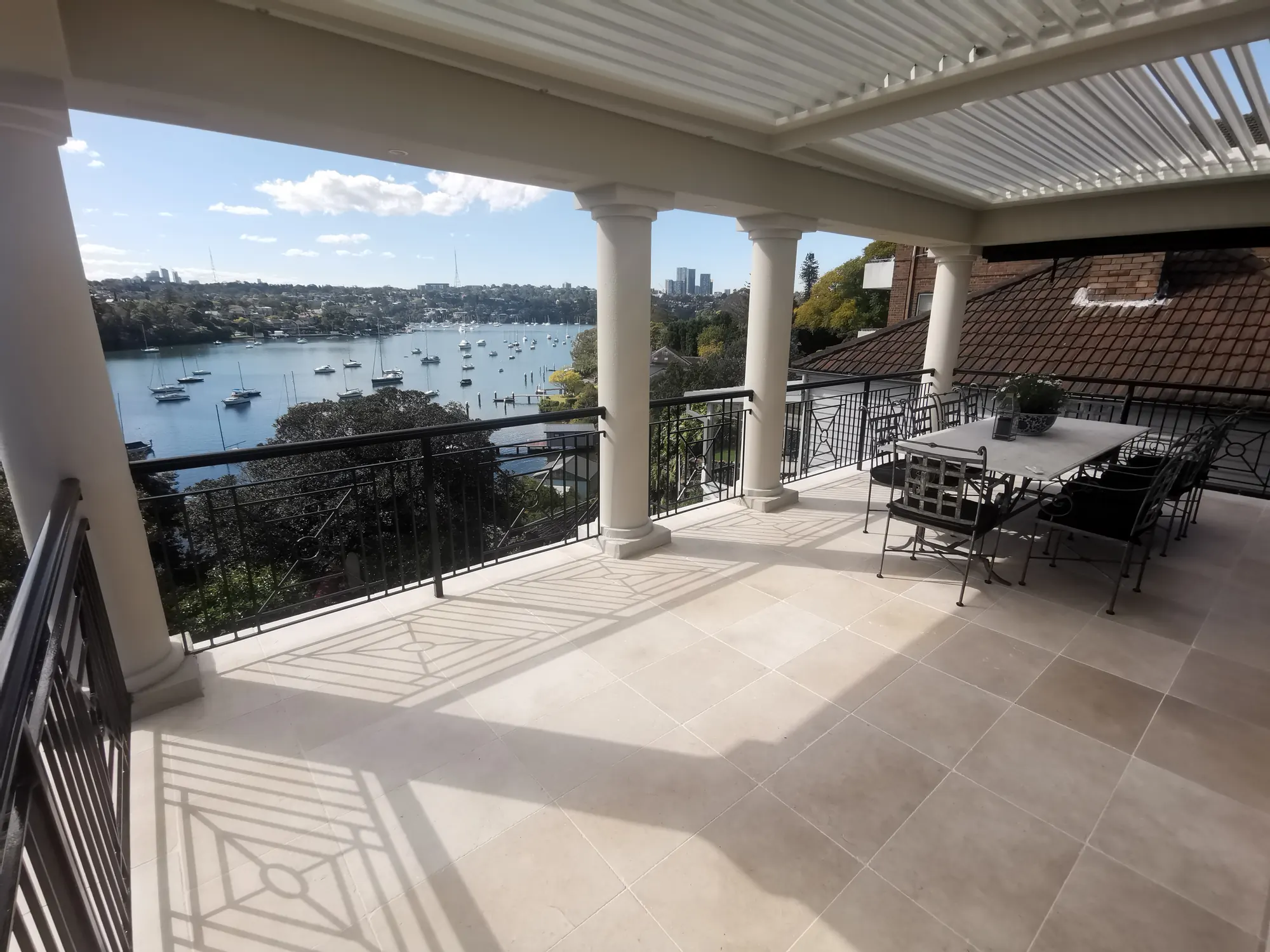
Large-format and natural stone tiles do not forgive an uneven substrate — every lippage-free floor starts with the screed being brought level and square before a tile is cut. Porcelain, marble and travertine each move and cut differently, and each is set out according to what the material needs.
The same attention carries outdoors: terraces, balconies and entertaining areas are tiled to fall correctly to drainage points and finished flush against glass balustrades, steps and pool edges.
What’s included
- Porcelain, marble and natural stone floor tiling
- Large-format slabs laid lippage-free with precise falls
- Internal floors, terraces, balconies and entertaining areas
- Step treads, garden paths and outdoor stair tiling
- Substrate levelling and preparation before laying
Recent work
Floor Tiling across the Eastern Suburbs.
Frequently asked
- Porcelain is dense, low-maintenance and well suited to bathrooms, kitchens and high-traffic areas. Marble and natural stone bring a warmer, veined finish but need sealing and a little more care. Davide can talk through which suits the room and the budget.
- Yes, that is a large part of the floor tiling work — terraces, balconies, entertaining areas and steps, always set out to fall correctly to drainage points and waterproofed first where the substrate needs it.
- Generally any tile with a side longer than 600mm. Large-format tiles show up every imperfection in a substrate, so the floor is screeded and levelled before laying to avoid lippage between tiles.
What is the difference between porcelain and marble for a floor?
Can you tile outdoor terraces and balconies, not just indoor floors?
What does "large-format" tiling actually mean?
Ready to talk about floor tiling?
Call or email Davide directly — no forms, no call centre. Tell him what you're planning and he'll give you a straight answer.